Change & Adoption · 30 October 2026 · 9 min read
We Put a Man on the Moon Before We Put Wheels on a Suitcase
Lessons in technology, design and change from a 1962 airport terminal – and why the hard part of any transformation is never the technology itself.
On our way home from Vancouver, we broke the journey with an overnight stay at the old TWA Flight Center at JFK. I'd booked it as a treat for my husband, who is an aerospace engineer. Little did I know how wonderful it would be for me too. Eero Saarinen designed it as a celebration of the jet age, and it now lives on as the TWA Hotel. It's part museum and part time capsule, and it's full of lessons for anyone leading change.
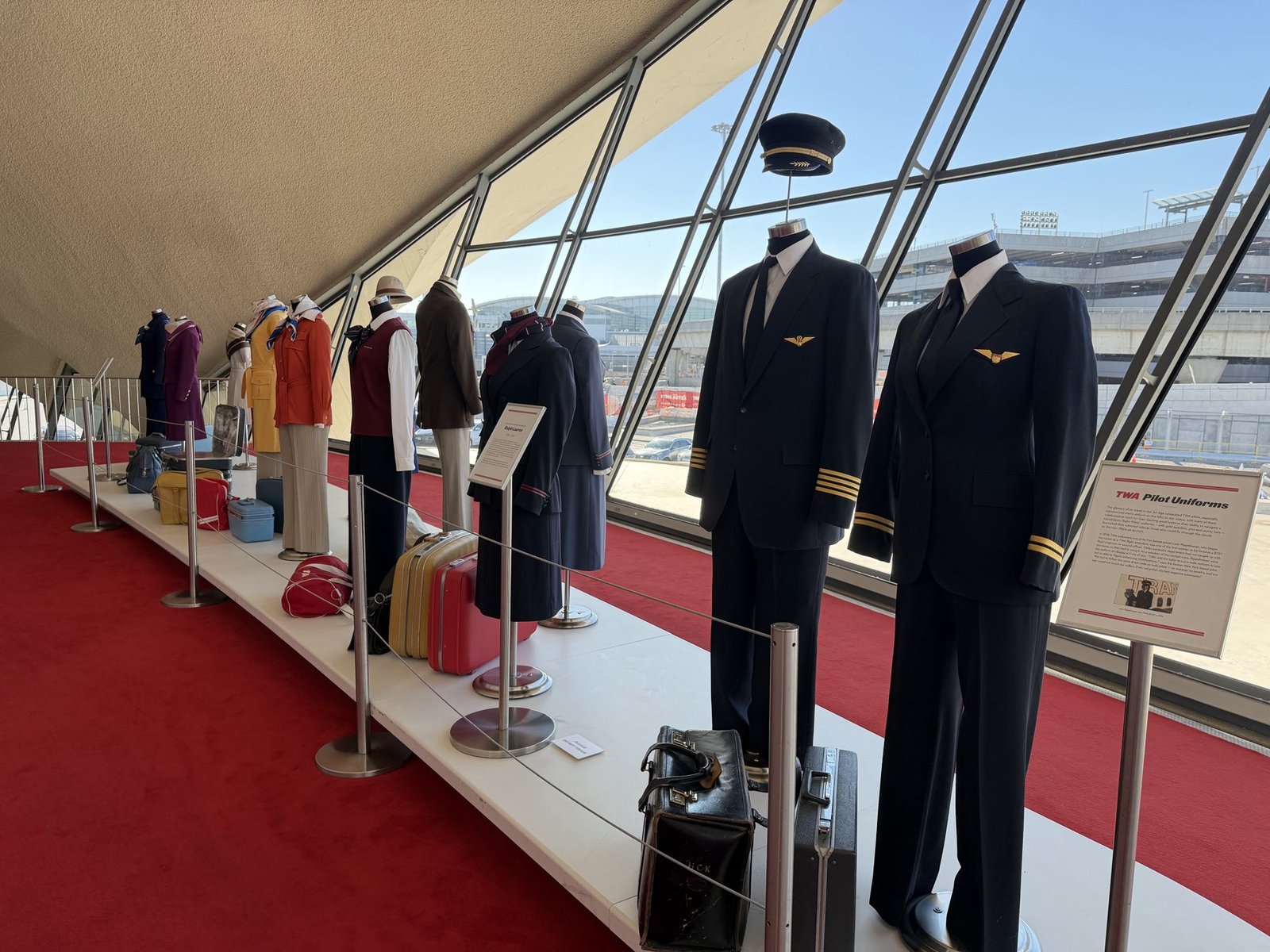
The display that stopped me wasn't the sweeping concrete or the famous red carpet. It was a row of ground-crew uniforms (a yellow oilskin, a padded red jacket, striped overalls) with a stack of hard-shell suitcases at their feet.
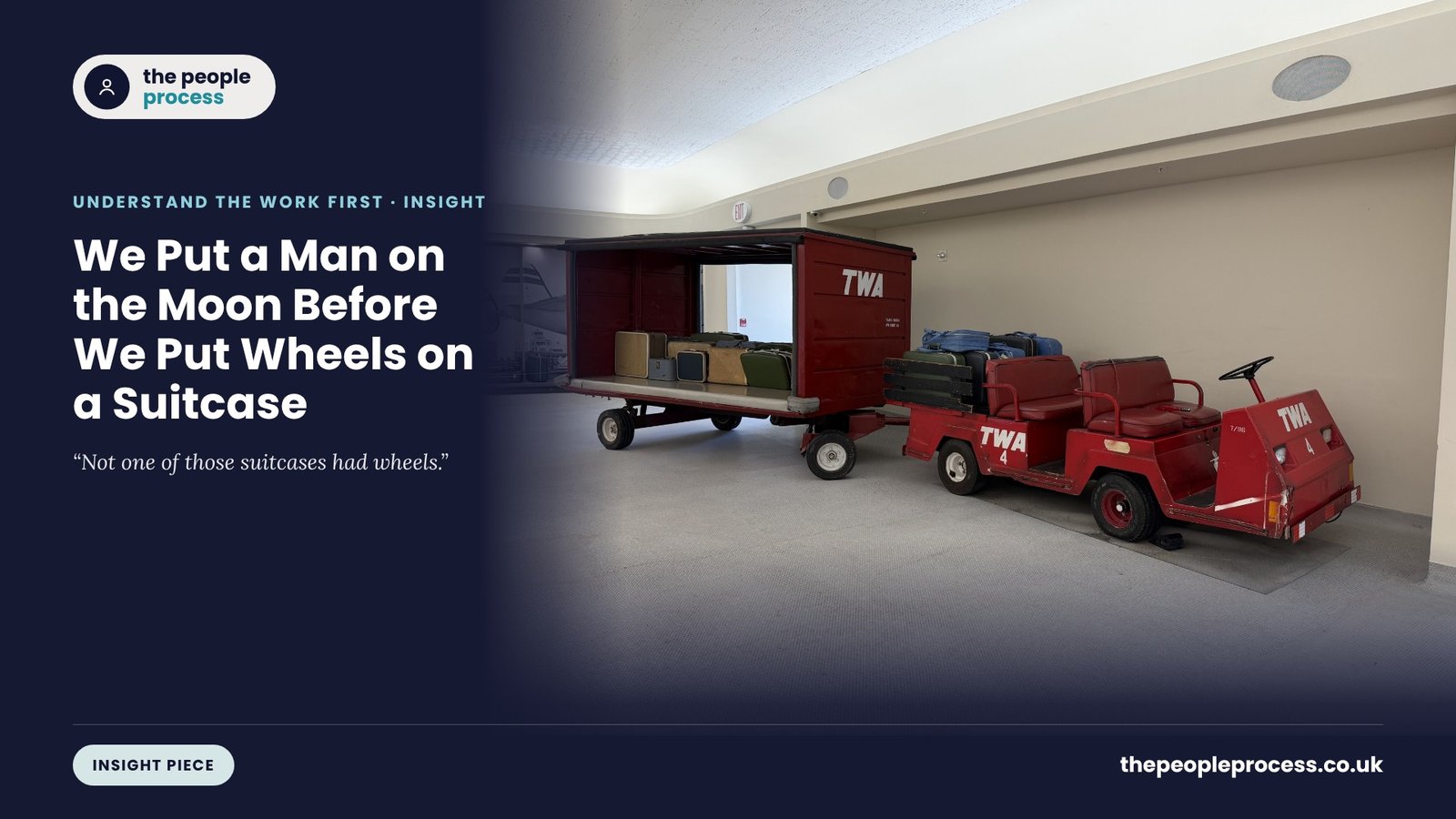
Not one of those suitcases had wheels.
I remember that world well. I've been travelling since I was six weeks old, and I flew in the glamour days of TWA and BOAC, long before anyone thought to put wheels on a case. I also remember the horror of being seated in the smoking section.
Around the corner sat a red TWA baggage tug, still hitched to its cart and piled with vintage luggage. That was the system those suitcases lived in. People carried them, porters lifted them, and tugs hauled them across the apron. Every bag in that building was designed to be lifted by someone.
The invention was easy. The adoption took 17 years.
In 1970, a year after the Moon landing, luggage executive Bernard Sadow screwed four castors onto a suitcase. He pulled it along on a strap and patented the idea. The technology was hardly new, since wheels and handles had existed for millennia. Department stores still turned him down.
The objections weren't about engineering. The buyers' view was that men wouldn't pull their own luggage, because carrying a heavy case was seen as part of being a capable traveller. Airports were also smaller, and porters and kerbside trolleys were part of how travel worked. Sadow's suitcase solved a problem the system didn't yet admit it had.
Wheeled cases sold, but they wobbled and tipped, and they stayed a niche product. The real breakthrough came in 1987. Robert Plath, a Northwest Airlines pilot, put two wheels on a case, turned it upright and added a telescopic handle. He built it in his garage for crews who were walking ever longer terminals. Flight attendants used the Rollaboard in public, at every gate, and passengers saw it working. Within a decade, the old way had gone.
That's a classic pattern in transformation. The capability usually exists long before the change happens. Adoption comes when the design fits how people actually work, when credible peers model it, and when the old social norm no longer has anything holding it up.
You never change just the suitcase
Look at that baggage tug again. The wheeled case didn't only change a product. It changed a whole operating model.
- Roles: the porter's job shrank, and travellers took on work that someone else used to do.
- Process: carry-on became the default, boarding slowed, and overhead bins became contested space.
- Infrastructure: terminals grew longer because people could now walk them with their bags. Bins, aircraft cabins and airline baggage policies were redesigned around the new standard.
- Commercial model: checked bags later became a revenue line in their own right.
It's a pattern I see often in HR and technology programmes. We buy the "suitcase", whether it's a new platform, a self-service portal or an AI tool. Then we're surprised that the roles, handoffs, policies and incentives around it don't move by themselves. The object is the easy part. The system around it is the transformation.
Same trunk, opposite travellers
Habits outlast the systems that formed them, but they don't always take the same shape. I learned to travel at boarding school, where everything you owned for a term went into a trunk.
A few nights ago I was reminded of this. We were at comedian Mark Simmons' show in SoHo, where he performed to four Brits and an American, and got talking to a lovely couple there. The lady travels with carry-on luggage only, and she puts that down entirely to her boarding school days. I laughed, because I travel with a full walk-on wardrobe, and I credit exactly the same thing: those trunks.
We'd had much the same experience: boarding school, the trunk and packing for a whole term away. Yet it took us in opposite directions. Living out of a trunk taught her to need very little. It taught me to bring everything, just in case.
This is the part of change we most often underestimate. People don't come to a new system as blank slates. They bring the habits their old systems taught them, and the same system can teach different people completely different lessons. You can't predict how someone will respond to change just from where they've come from. Before you roll out the new suitcase, find out what the old trunk taught each group of your people. Don't assume it taught them all the same thing.
Designed perfectly for a moment that passed
The terminal itself carries the second lesson. It opened in 1962 and was built for the propeller-to-jet transition, with intimate gates, sculpted walkways and a building shaped like flight itself. It was close to perfect for the operating model of its day.
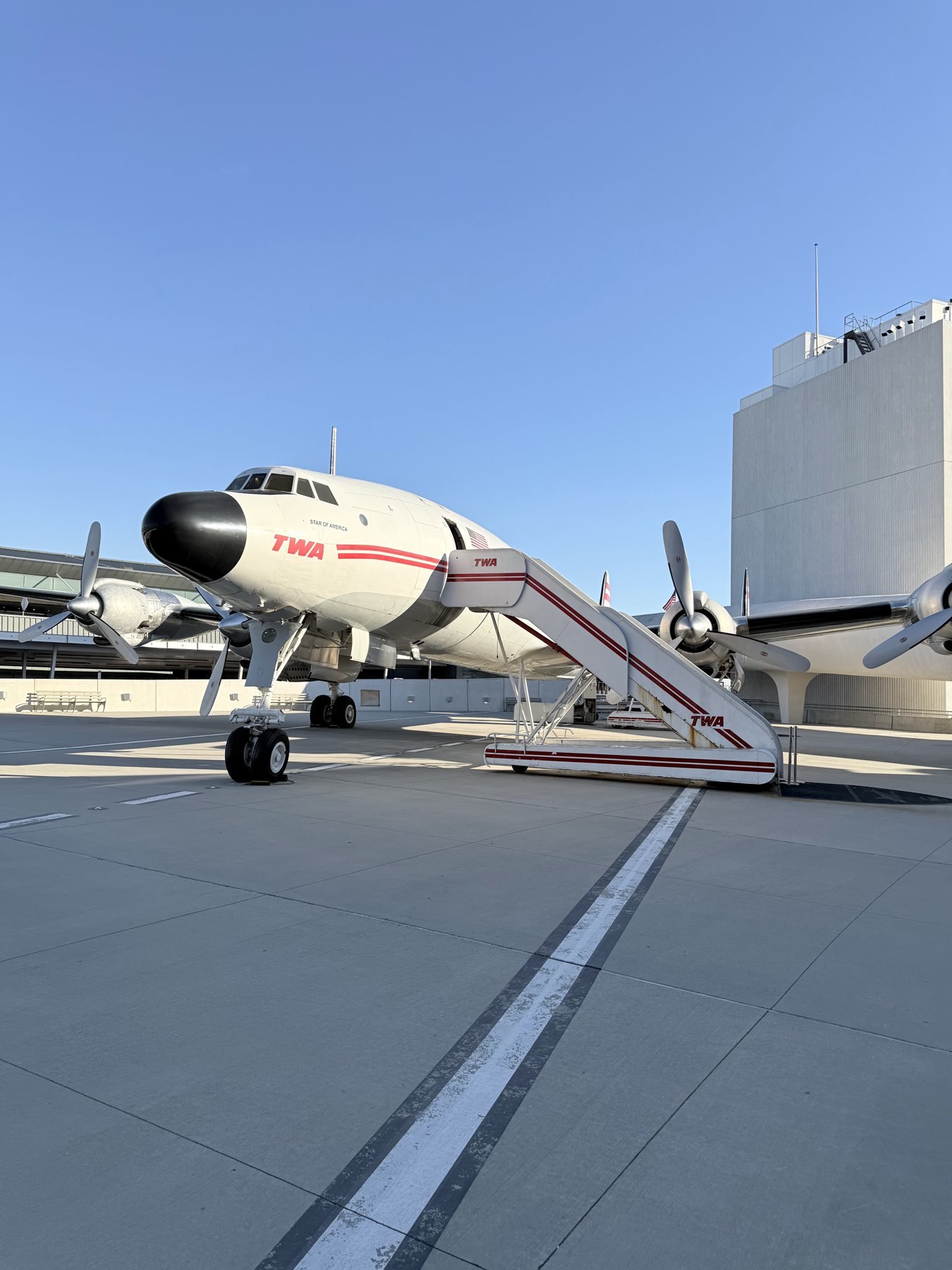
Then the model changed. Wide-bodied jets brought hundreds of passengers to a single gate, and passenger numbers soared. Security screening became essential, and later baggage systems needed space the curves couldn't give. The architecture was so specific that it couldn't flex. The terminal closed in 2001.
It wasn't demolished, though. It was listed, restored and reopened in 2019 as a hotel, with a new purpose built around what the building does brilliantly, which is atmosphere, story and arrival. Tyler Morse, founder of MCR Hotels, won the competition to redevelop the terminal. Asked about the biggest risk his firm had taken, he answered, "Probably TWA," adding, "It's something we're extremely proud of." Having stayed there, I can see why. It's a brilliant example of preserving a gem and putting it to work as a fantastic hotel, venue and experience, rather than leaving it as a museum piece.
There are two lessons here for anyone designing systems or organisations:
- Design for the next operating model, not only today's. Bespoke processes and heavily customised platforms feel great on launch day. They become the hardest things to change.
- Legacy isn't the same as waste. Before you decommission an old system, team or way of working, ask what it does uniquely well, and whether that strength could be repurposed rather than lost.
Today's infrastructure is tomorrow's exhibit
Upstairs, beneath a glowing oval sign, there's a row of rotary pay phones in their own little booths, each still advertising a 10¢ call. In 1962 they were critical infrastructure. Every traveller depended on them. Now they're props that people photograph.
No one decided to retire the pay phone. A better tool simply arrived, and adoption made the decision. That prompts an uncomfortable question for every leader: which of our "essential" systems and rituals are the pay phones? It might be the monthly approval meeting, the spreadsheet that runs the business, or the job role built around a handoff that technology now does automatically.
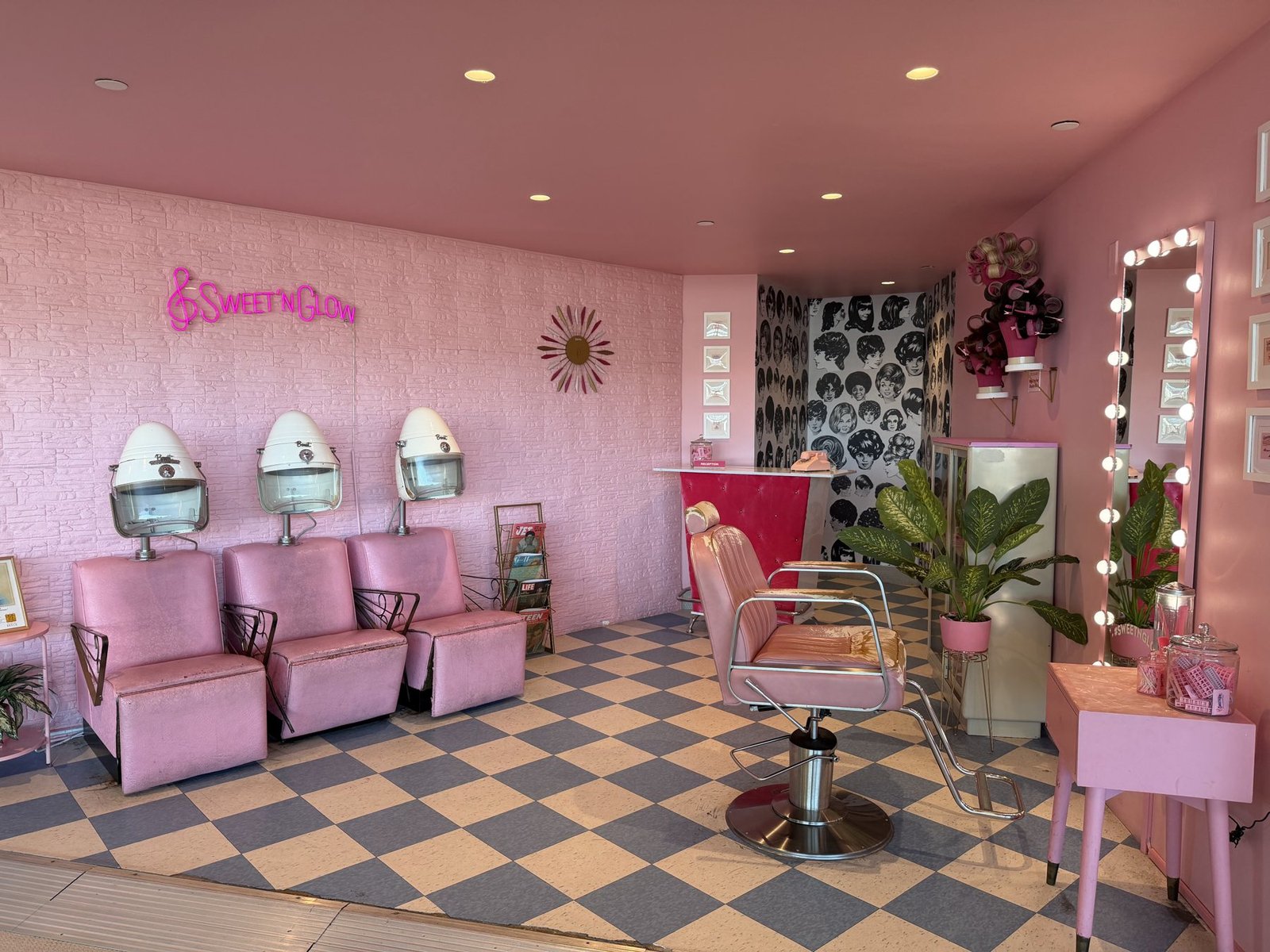
Along the windows there's a display of TWA uniforms, from 1960s cabin crew outfits to pilots' jackets with gold braid. A woman's pilot uniform stands beside a man's. It's a quiet reminder that systems are often designed around one "default" user and adapted for everyone else later. The same is true of HR policies, software interfaces and office layouts. Who was the default user when your current system was designed, and who has had to adapt to fit it since?
The smoking section: what was that all about?
Nothing from those glamour days sums up how norms change better than the smoking section. For decades we accepted the idea that a curtain, or just a row number, could keep smoke away from everyone else in a sealed metal tube. It couldn't. Anyone who sat a row away from the line knows that.
The smoking section was a compromise design. Rather than tackling the real problem, it split it into zones, so everyone could tell themselves it had been dealt with.
Undoing it took nearly three decades, and it happened country by country and airline by airline. United introduced the first non-smoking section in 1971. In 1980, Scottish airline Loganair became the first UK carrier to go completely smoke-free. The US banned smoking on domestic flights of under two hours in 1988, then on those under six hours in 1990. In 1992, the International Civil Aviation Organization (ICAO) urged its member states to bring in complete bans by 1 July 1996.
After that, the dominoes fell. Delta banned smoking across its worldwide network in 1994, and Canada banned it on all Canadian carriers that same year. Virgin Atlantic followed in 1995, the EU in 1997, and British Airways in 1998, eight years after its first trial. JAL and ANA were among the last major airlines to stop it on international flights, in 1999. The US banned smoking on all flights to and from the country in 2000. Some carriers held out much longer, and Cubana didn't ban smoking on international flights until 2014.
Look closely and there's another familiar pattern. The early US bans covered the cabin but not the flight deck, and in China pilots could still smoke in the cockpit until 2019. The people at the front were the last to be asked to change.
Organisations have smoking sections too: the pilot that ring-fences a problem instead of fixing it, the policy that applies to "some teams", the workaround everyone knows leaks. If you have to draw an invisible line around a problem to live with it, that's usually a sign the problem still needs solving. And it's worth asking which of today's accepted practices our successors will look back on and ask, "What was that all about?"
Yet look by the lavatory door on almost any modern aircraft and you'll still find an ashtray. That isn't nostalgia. US certification rules still require a removable ashtray on or near every lavatory door, whether smoking is allowed or not. The rule exists because someone, somewhere, will break the ban, and a cigarette stubbed out safely is far less dangerous than one hidden in a bin full of paper towels. Aviation learned that the hard way: the 1973 crash of Varig Flight 820 was linked to a fire possibly started by a cigarette thrown into a lavatory bin.
I love this as a design principle. The policy says no one smokes, but the design plans for the person who does. Good transformation does the same. It doesn't assume perfect compliance with the new process. It builds a safe place for the workaround, the exception and the old habit, so that a lapse doesn't become a fire.
What the suitcase teaches transformation leaders
- Capability isn't adoption. The wheel was ready in 1970, and the behaviour shift came in 1987. Plan and budget for the gap.
- Design around real work. Plath succeeded because he built for people walking long corridors with a bag in hand, not for a showroom.
- Visible early adopters change norms faster than communications do. Crews pulling Rollaboards through every terminal did more than any advert could. Find your flight attendants.
- Map the whole system. Every new "suitcase" changes roles, processes, policies and the physical or digital space around it.
- Respect the habits the old system taught. People carry their "trunk" behaviours into every new way of working, and the same experience can produce opposite habits. Find out what yours learned, build on the useful habits and plan deliberately for the rest.
- Don't settle for a smoking section, but keep the ashtray. A compromise that only contains a problem is a delay, not a solution. Do design for the person who'll break the new rule, though, so that a lapse stays safe.
- Build in flex, and respect legacy. Avoid designs so bespoke they can't evolve, and look for what old systems still do brilliantly before you switch them off.
We're living through another of these shifts now, as AI arrives in everyday work. The technology is here. Whether it rolls or wobbles will depend, as it always has, on design, people and the systems around them.
What's the "suitcase without wheels" in your organisation? What's the obvious improvement everyone can see, but the system hasn't yet made room for? I'd love to hear your examples in the comments.
Related insights
Ready to Go Live Isn't the Same as Ready
The Automation Business Case Starts With the Work, Not the Technology
Maybe We Need to Bring Back the Stopwatch
Sources
About the author
Juli Oliver-Smith is a transformation and people change consultant – senior interim, consultancy and programme leadership across people, process, technology and transformation.
More about JuliFound this useful? Get my monthly newsletter, Understand the Work First, on LinkedIn – or start a conversation.