Work Before Structure Part 3 of 4 · 1 October 2026 · 7 min read · Updated 1 October 2026
If You Can't Manage Someone Remotely, Is Remote Working Really the Problem?
Managers need to manage, coach and develop their people. Proximity isn't management – and remote working didn't create poor management. It just made it harder to hide.
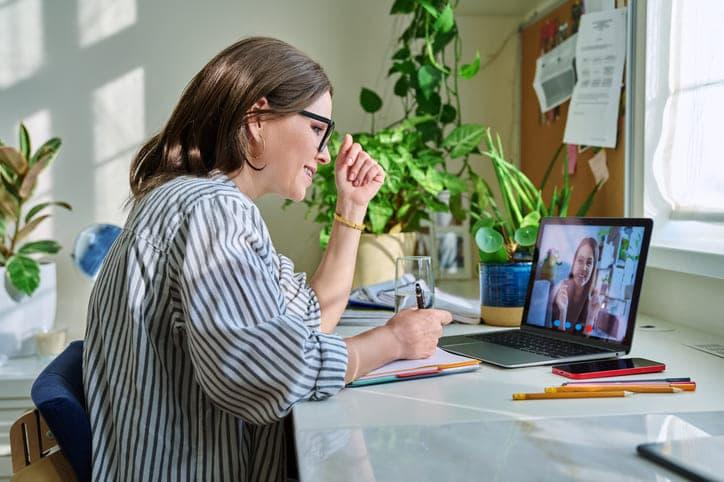
One of the arguments I hear for getting people back into offices is that managers need their teams in the room to manage, coach and develop them. I agree completely that managers need to manage, coach and develop their people. I'm just not convinced they need to be sitting next to them to do it.
About 20 years ago, when I was at RBS, I went on training specifically designed to teach us how to lead geographically dispersed teams. This was before Teams, Zoom and reliable broadband. We had instant messaging and conference rooms equipped with what then felt like incredibly clever video technology. Connections dropped. Pictures froze. There was a lag between someone speaking and everyone else hearing them. And that unmistakable dial-up noise will probably remain with my generation forever! Yet even then, organisations recognised that geography was changing and managers needed to learn how to lead differently.
Fast-forward 20 years and I have managed teams across countries and continents. I’ve even had someone in my team whom I didn’t physically meet for around 12 months because geography and diaries simply didn’t align. We still built a relationship. We still discussed performance. We still solved problems. We still got work done.
And I’ve seen the same principle operate in very different environments. I saw exactly the same thing at Canterbury City Council, running remote data-entry and call-centre teams around 2010 – I’ve told that story in full in Three Days in the Office, but the short version is: remote didn’t mean unmanaged. We weren’t trying to establish whether somebody was working by looking across an office and seeing them sitting at a desk. We knew what their work was and whether they were delivering it.
I’ve also had some very robust performance conversations virtually. Are they sometimes easier face to face? Absolutely. But a difficult performance conversation doesn’t suddenly become a good one because two people are sitting in the same room.
What makes the difference is the relationship that existed before the conversation. Does the person know what’s expected of them? Have they had regular feedback, and have you listened when they’ve raised something with you? Do they trust you, and do they believe you’re genuinely invested in helping them succeed – including telling them when something isn’t right?
Those things are management. Proximity isn’t.
That doesn’t mean I want a world where nobody meets. Quite the opposite. I love spending time with my teams, colleagues, clients and customers. Some of the most productive work I’ve done has happened with a group of people physically together.
But I think we need to distinguish between being together purposefully and being together habitually. Sometimes a workshop genuinely needs a room, and a new team can benefit enormously from spending real time together early on. Someone who’s struggling often needs more contact, not less. Sometimes you need the dinner, the coffee and the conversations that happen outside the formal meeting – and sometimes we simply want to see each other, because we’re human.
All valid. But perhaps the leadership capability is recognising which is which.
Everyone had a different Covid – and my story on that is for another day. But whatever our own experience, it pushed most of us into a world where we suddenly had to communicate remotely, or, if not remotely, in a very different way from anything we’d learned up to that point. We learned a lot of lessons, fast. The technology accelerated, and with it came a different way of working, a different mindset and, for some, a different life altogether.
For those of us who had been communicating with and managing teams remotely for many years, none of this was new. But what did it do to the people who had never done it before? Did they learn good skills, or bad habits? Or did they not even realise they were learning skills at all?
CIPD research shows that organisations themselves identify challenges from hybrid working around connection, culture and management. Those are legitimate concerns. But we should ask what they are actually telling us. Is the problem that people aren’t in the office enough – or that we haven’t equipped every manager to lead effectively when they aren’t?
Because global organisations have been doing this for decades. If someone’s manager is in London and their team members are in Germany, Poland, Dubai and Singapore, insisting everyone attends their local office three days a week doesn’t suddenly put the team together. The management relationship is still remote.
Technology has made that immeasurably easier than it was when I first learned to do it. But technology isn’t actually the most important part. Leadership is.
It means building real relationships, setting clear expectations, having honest conversations, creating trust, knowing your people, being available, and dealing with problems rather than avoiding them. And when being together adds value, get together.
Remote working didn’t create poor management. It just made it harder to hide.
Sources
In this series · Work Before Structure
- Part 1Flexibility Isn't a Gen Z Thing. It's a Human Thing.
- Part 2Three Days in the Office? You’re Starting With the Wrong Question.
- Part 3If You Can't Manage Someone Remotely, Is Remote Working Really the Problem?You are reading this
- Part 4Don’t Design the Job Yet. Design the Work.
About the author
Juli Oliver-Smith is a transformation and people change consultant – senior interim, consultancy and programme leadership across people, process, technology and transformation.
More about JuliFound this useful? Get my monthly newsletter, Understand the Work First, on LinkedIn – or start a conversation.